Cart
0
What is Powerloom?
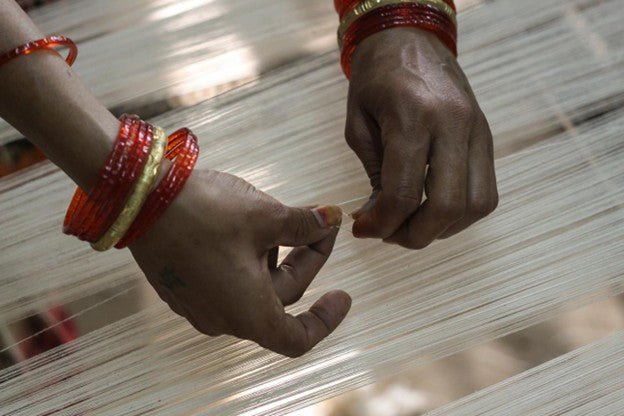
Powerloom fabric is produced using electrically operated machines designed to weave fabric at very high speeds. These machines can create hundreds of metres of fabric in a single day, making production faster and significantly more economical than handloom weaving.


Powerloom fabrics are engineered for consistency. Every thread is placed with mechanical precision, resulting in a perfectly uniform weave from beginning to end. While this efficiency allows manufacturers to produce clothing at lower prices, it also removes the individuality that makes handcrafted textiles special.
Many powerloom fabrics are made using cotton blends mixed with polyester or other synthetic fibres. These blends improve wrinkle resistance and reduce production costs, but they also alter how the fabric feels, breathes, and ages over time.
Powerloom fabrics certainly have their place in the modern textile industry. They make clothing more affordable and widely available. However, they are fundamentally different from handloom textiles in terms of craftsmanship, texture, durability, and cultural value.
Understanding this difference helps you make informed choices rather than relying solely on labels.
Feel
One of the first things people notice when they touch handloom cotton is that it feels different.
Not necessarily softer—but more alive.
Handloom fabric has a natural body and structure that comes from the slower weaving process. When you run your fingers across the fabric, you can feel the individual threads working together to create a surface that feels substantial yet breathable.
Powerloom fabric, in contrast, often feels smoother and more uniform because machines maintain identical tension throughout the weaving process. Many commercially produced fabrics are also chemically softened before reaching the market, giving them an artificially silky touch.
While powerloom fabric may initially feel softer in a store, genuine handloom cotton develops a softness that comes naturally through use. As the fibres relax over repeated washes, the fabric becomes increasingly comfortable without losing its strength.
This gradual transformation is one of the reasons handloom garments are cherished for years.
Texture
Texture is often the easiest way to distinguish handloom from powerloom fabric.
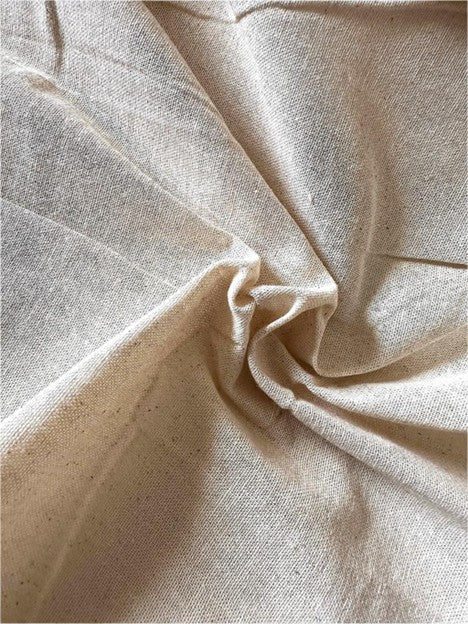
Look closely at a handloom textile, and you'll notice tiny variations in the weave. Some threads may sit slightly closer together, while others create subtle differences that are almost invisible unless you inspect the fabric carefully.
These natural inconsistencies are a hallmark of handcrafted weaving. They are created because every movement is controlled by a human rather than a machine.
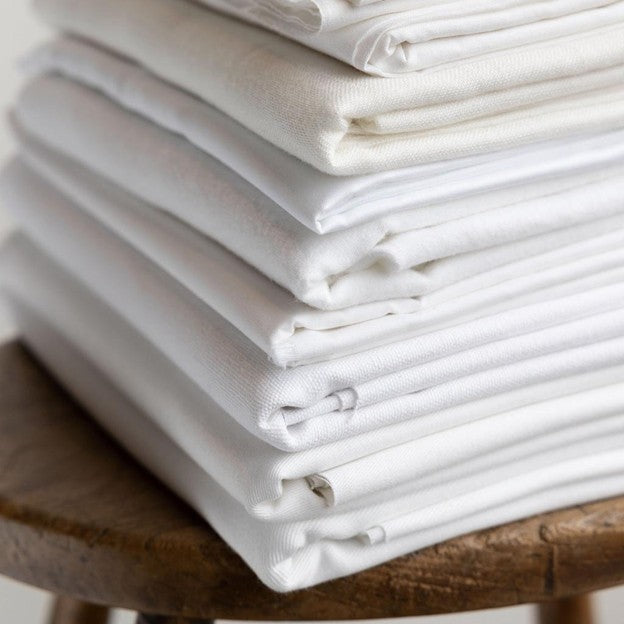
Powerloom fabrics, on the other hand, have an almost flawless surface. Every thread is woven with identical spacing, creating a perfectly consistent appearance throughout the fabric.
Although machine precision can look appealing, many textile enthusiasts appreciate the organic character that only handloom weaving can offer.
Each variation reminds us that the fabric was made by skilled hands rather than automated machinery.
Breathability
One of the greatest advantages of handloom cotton is its exceptional breathability.
Because the weaving process is slower and more relaxed, tiny spaces naturally exist between the threads. These allow air to circulate freely through the fabric, helping regulate body temperature throughout the day.
This is especially important in a country like India, where warm weather and humidity are common for much of the year.
Handloom cotton absorbs moisture efficiently and allows perspiration to evaporate naturally, keeping you cool and comfortable even during long hours of wear.
Powerloom fabrics, particularly those blended with synthetic fibres, often have a denser weave that reduces airflow. While they may appear similar visually, they can trap heat and moisture against the skin, leading to discomfort during extended wear.
Breathability is one of those qualities you rarely notice until you experience it—and once you do, it's difficult to go back.
Durability
Many people assume that machine-made fabrics are stronger simply because they are manufactured using modern technology.
In reality, durability depends on much more than production speed.
A well-crafted handloom fabric is woven with great attention to thread quality and weaving tension. When cared for properly, it becomes softer with every wash while maintaining its structural integrity.
Rather than wearing out quickly, handloom cotton develops character over time. Colours mellow gracefully, fibres relax naturally, and the garment becomes increasingly comfortable.
Powerloom fabrics may maintain a polished appearance initially, but depending on the fibre blend and manufacturing quality, they can begin to pill, lose shape, or thin out after repeated washing.
The true strength of handloom lies in its ability to age beautifully.
Price
One of the most common questions customers ask is why handloom garments cost more than machine-made alternatives.
The answer is simple.
Time.
A powerloom machine can produce hundreds of metres of fabric in a single day.
A handloom artisan may spend two to five days weaving the same quantity.
Every metre of handloom fabric reflects hours of concentrated skill, careful attention, and generations of inherited knowledge.
The price also includes fair wages for artisans, high-quality natural yarns, smaller production batches, and meticulous quality checks.
While handloom may require a higher initial investment, its durability, comfort, and timeless appeal often make it a better long-term value than frequently replacing inexpensive garments.
Instead of asking, "Why is handloom expensive?" it may be more meaningful to ask, "What does this price support?"
The answer is people, tradition, and craftsmanship.
Environmental Impact


The environmental footprint of clothing begins long before it reaches your wardrobe.
Handloom weaving is one of the most sustainable forms of textile production because it relies almost entirely on human skill rather than electricity-intensive machinery. It consumes significantly less energy, produces minimal carbon emissions during weaving, and often supports smaller-scale, local production.
Many handloom textiles are made using natural fibres such as cotton, which are biodegradable at the end of their life cycle.
By contrast, large-scale industrial textile production typically involves higher energy consumption, greater water usage, and longer supply chains. Fabrics blended with synthetic fibres can also release microplastics during washing, contributing to environmental pollution.
Choosing handloom isn't just about preserving tradition—it is also a conscious step toward more responsible fashion consumption.
Artisan Livelihood
Behind every handloom garment is a family whose knowledge has been passed down over generations.
For many weaving communities across India, handloom is not simply an occupation. It is their identity, culture, and heritage.
Every purchase of authentic handloom directly supports artisans, helping sustain livelihoods that might otherwise disappear in the face of mass production.
These weavers preserve weaving techniques that cannot be replicated by machines. They keep regional textile traditions alive, ensuring that future generations continue to inherit skills that have defined Indian craftsmanship for centuries.
When you wear handloom, you become part of that story.
Your purchase helps ensure that these traditions continue to thrive rather than becoming museum exhibits of a forgotten past.
Buying Guide
Buying handloom for the first time can feel overwhelming, especially when many products are incorrectly labelled as "handloom."
Here are a few things to keep in mind:
Know the origin. A trustworthy seller should be able to tell you where the fabric was woven and which weaving tradition it belongs to.
Examine the weave. Genuine handloom often has tiny natural irregularities that indicate handcrafted weaving.
Read product descriptions carefully. Look for information about fibre composition, weaving method, and care instructions.
Be realistic about pricing. Authentic handloom requires time and skilled labour. If a product is unusually inexpensive, it is worth questioning its authenticity.
Buy from brands that value transparency. A good brand is proud to share the story behind its fabrics, artisans, and sourcing practices.
How House of Sumegha Sources Fabrics
At House of Sumegha, we believe every garment begins with the fabric.
Before a design is sketched or a silhouette is created, we spend time understanding the textile itself—its origin, its weaving technique, its texture, and the people behind it.
We work with trusted weaving communities and suppliers who share our commitment to quality, authenticity, and craftsmanship. Rather than following seasonal trends or mass-producing collections, we carefully select fabrics that embody comfort, durability, and timeless elegance.
Many of the textiles we use are woven using traditional techniques that have been preserved for generations. We choose fabrics not only for their beauty but also for how they feel against the skin, how they age with time, and how naturally they fit into everyday life.
Every collection is intentionally produced in limited quantities, allowing us to focus on thoughtful design, responsible sourcing, and uncompromising quality.
When you choose a House of Sumegha garment, you're not simply purchasing clothing. You're bringing home a piece of India's textile heritage—crafted with care, designed to last, and created to become part of your everyday story.
How House of Sumegha Sources Fabrics
At House of Sumegha, we believe every garment begins with the fabric.
Before a design is sketched or a silhouette is created, we spend time understanding the textile itself—its origin, its weaving technique, its texture, and the people behind it.
We work with trusted weaving communities and suppliers who share our commitment to quality, authenticity, and craftsmanship. Rather than following seasonal trends or mass-producing collections, we carefully select fabrics that embody comfort, durability, and timeless elegance.
Many of the textiles we use are woven using traditional techniques that have been preserved for generations. We choose fabrics not only for their beauty but also for how they feel against the skin, how they age with time, and how naturally they fit into everyday life.
Every collection is intentionally produced in limited quantities, allowing us to focus on thoughtful design, responsible sourcing, and uncompromising quality.
When you choose a House of Sumegha garment, you're not simply purchasing clothing. You're bringing home a piece of India's textile heritage—crafted with care, designed to last, and created to become part of your everyday story.